
Getting to know entomopathogenic nematodes
Microscopic soil worms that enter an insect, release their associated bacterium and multiply inside it. They are not pests: they belong to the normal fauna of a living soil. Here is what they are, what can be seen with the naked eye and what tells them apart.
Documentary information. In most countries these organisms are only distributed as authorised commercial products: this page describes them, it does not propose producing them on the farm.
Not to be confused: Pochonia chlamydosporia and Purpureocillium lilacinum are fungi that parasitise the eggs of harmful nematodes, not nematodes. They are with the fungi: Entomopathogens
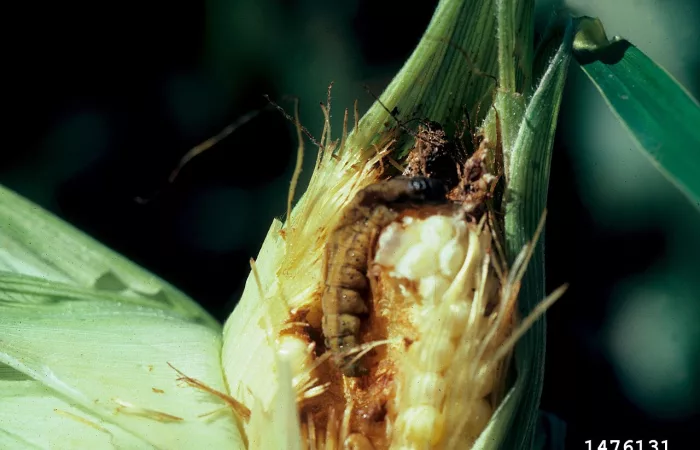
A nematode that does not chase its host: it stands on its tail at the soil surface and waits for a moving insect to pass, then latches on. It is therefore associated with caterpillars and larvae that travel on the surface rather than with those living buried. Like the others it carries its symbiotic bacterium; the cadaver turns ochre to brown and does not smell of rot, the bacterium's signature.
Sources : University of Florida IFAS — Entomopathogenic nematodes · CABI Compendium — Steinernema carpocapsae
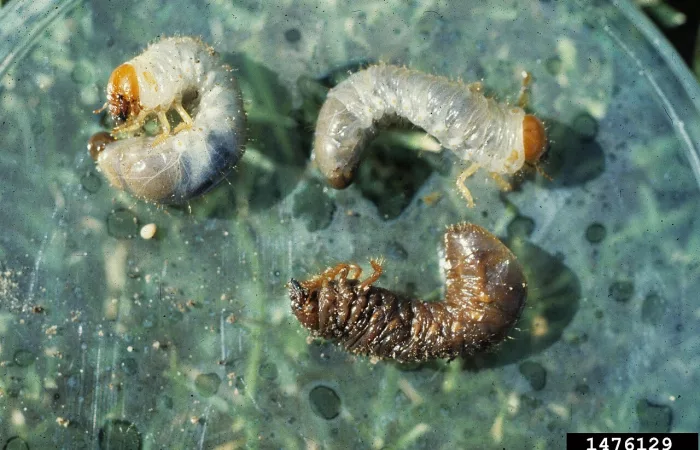
A nematode that actively ranges through the soil following carbon dioxide and the smell of damaged roots, reaching larvae that live buried, such as white grubs. Its associated bacterium, Photorhabdus, stains the cadaver a characteristic brick red and makes it luminescent in the dark. A single infective juvenile can found a whole generation, because the first adults are hermaphrodites.
Sources : University of Florida IFAS — Entomopathogenic nematodes · CABI Compendium — Heterorhabditis bacteriophora
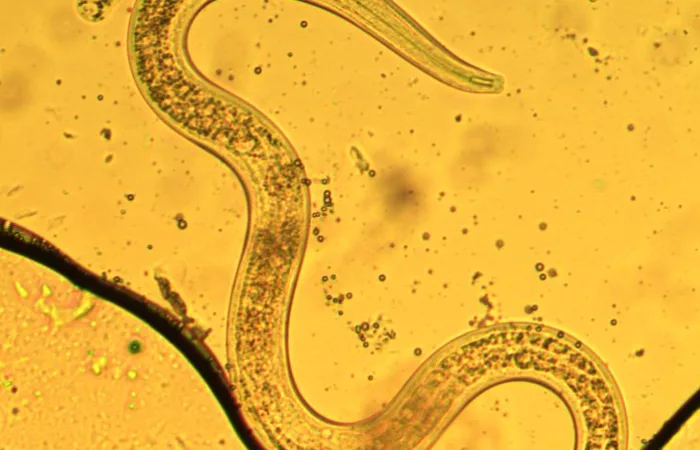
Unlike the previous ones, this nematode parasitises slugs and some snails rather than insects. It enters beneath the animal's mantle, which swells characteristically, carrying soil bacteria that break down the tissues. It lives in moist soils in Europe and has also been found on other continents. The species was described in 1859 and taken up again by research from the 1990s.
Sources : Journal of Nematology — Phasmarhabditis hermaphrodita, biology and distribution · CABI Compendium — Phasmarhabditis hermaphrodita
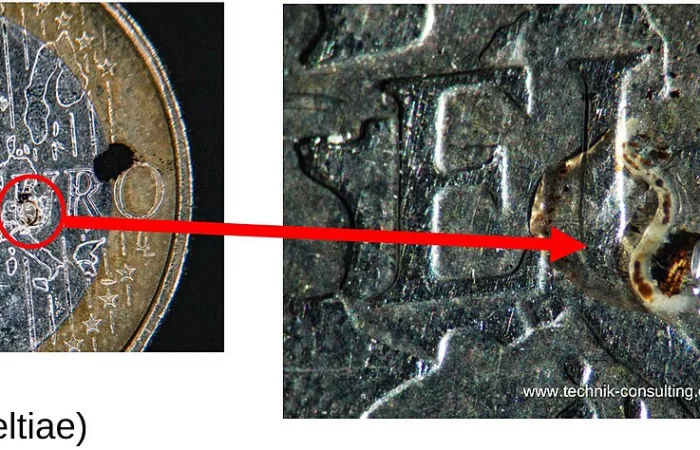
Soil nematode of temperate climates, less than a millimetre long. Its infective juvenile seeks out the insect, enters through its natural openings and releases its associated bacterium (Xenorhabdus), which transforms the inside of the host; the nematodes multiply there and emerge a few days later. It is mainly associated with fungus gnat larvae and with thrips stages that pass through the soil. It lives in the free water between soil particles: moist, cool soil, out of direct light.
Sources : CABI Compendium — Steinernema feltiae · University of Florida IFAS — Entomopathogenic nematodes (Steinernematidae)
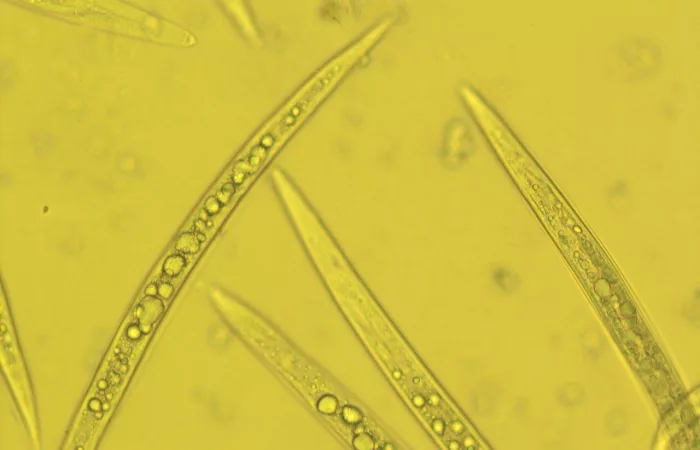
A genus of soil nematodes whose insect-parasitic species (O. myriophilus, O. onirici and others) have mostly been described over the past twenty years, in tropical and temperate soils. Several carry bacteria of the genus Serratia instead of Xenorhabdus or Photorhabdus. It is the least known of the three groups: identification requires molecular biology, and its geographical range is still being established.
Sources : Nematology / Journal of Nematology — Oscheius, insect-parasitic species